
Migrating from WordPress to cms studio: Architecture, Memory & Ops Cost
Table of Contents
WordPress has dominated content management for two decades, yet as modern sites demand higher concurrency, native multilingual publishing, built-in AI authoring, and lower ops overhead, the weight of a PHP + MySQL + third-party plugin stack becomes increasingly clear. This article breaks down the real runtime architecture of both.
1. Runtime Stack & Resource Overhead
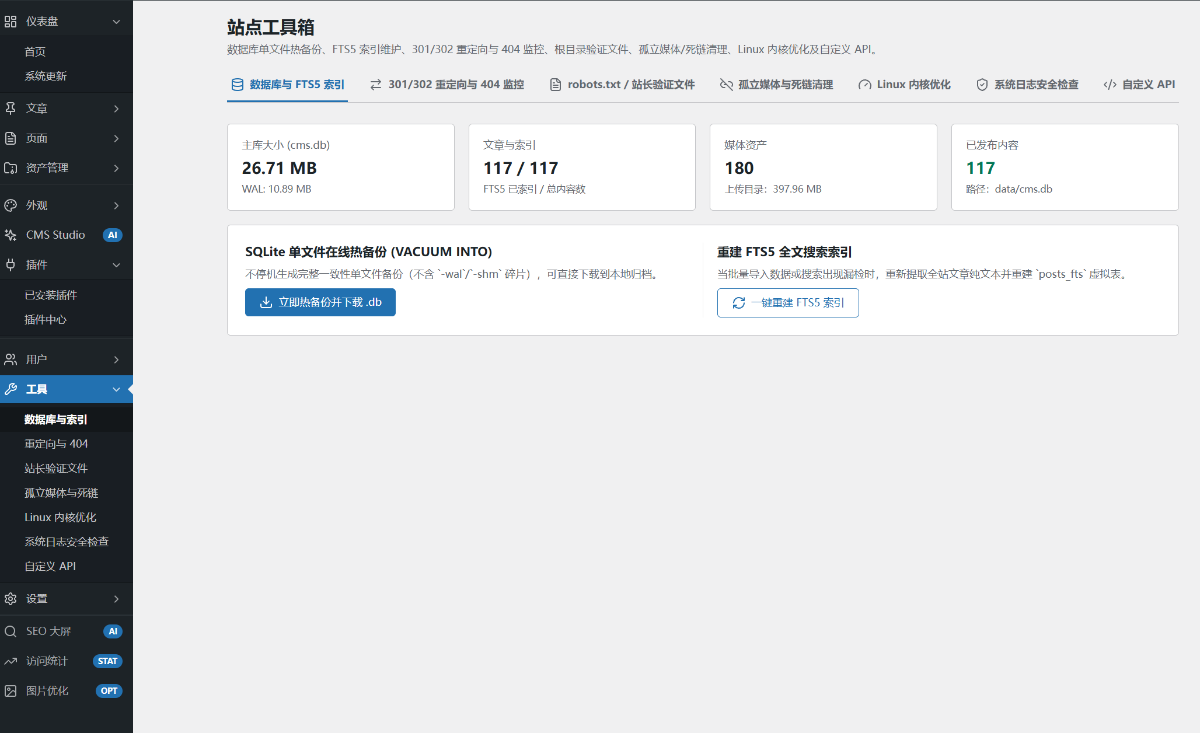
A standard production WordPress site typically requires Nginx/Apache, PHP-FPM, MySQL/MariaDB, and Redis object caching—consuming hundreds of MB of RAM even at idle. In cms studio, all of these roles converge inside a single Go process:
| Dimension | cms studio (Pure Go) | WordPress (PHP + MySQL) |
|---|---|---|
| Deployment Artifact | Single binary + SQLite data directory | PHP runtime + database server + web server |
| Resident Memory | Starts around tens of MB with built-in PageCache | Hundreds of MB to several GB (DB + PHP workers) |
| Multilingual Support | Native 7-language routes, translation groups & hreflang | Requires heavy commercial plugins like WPML / Polylang |
| Upgrade Workflow | Ed25519-signed self-update + theme/plugin hot update | Often constrained by PHP version & plugin compatibility |
2. Plugin Isolation: Why "Never Polluting the Main DB" Matters
WordPress plugins run inside the same PHP process and share the same database tables—one poorly written plugin can slow down the entire site or introduce SQL injection and arbitrary file-write flaws.
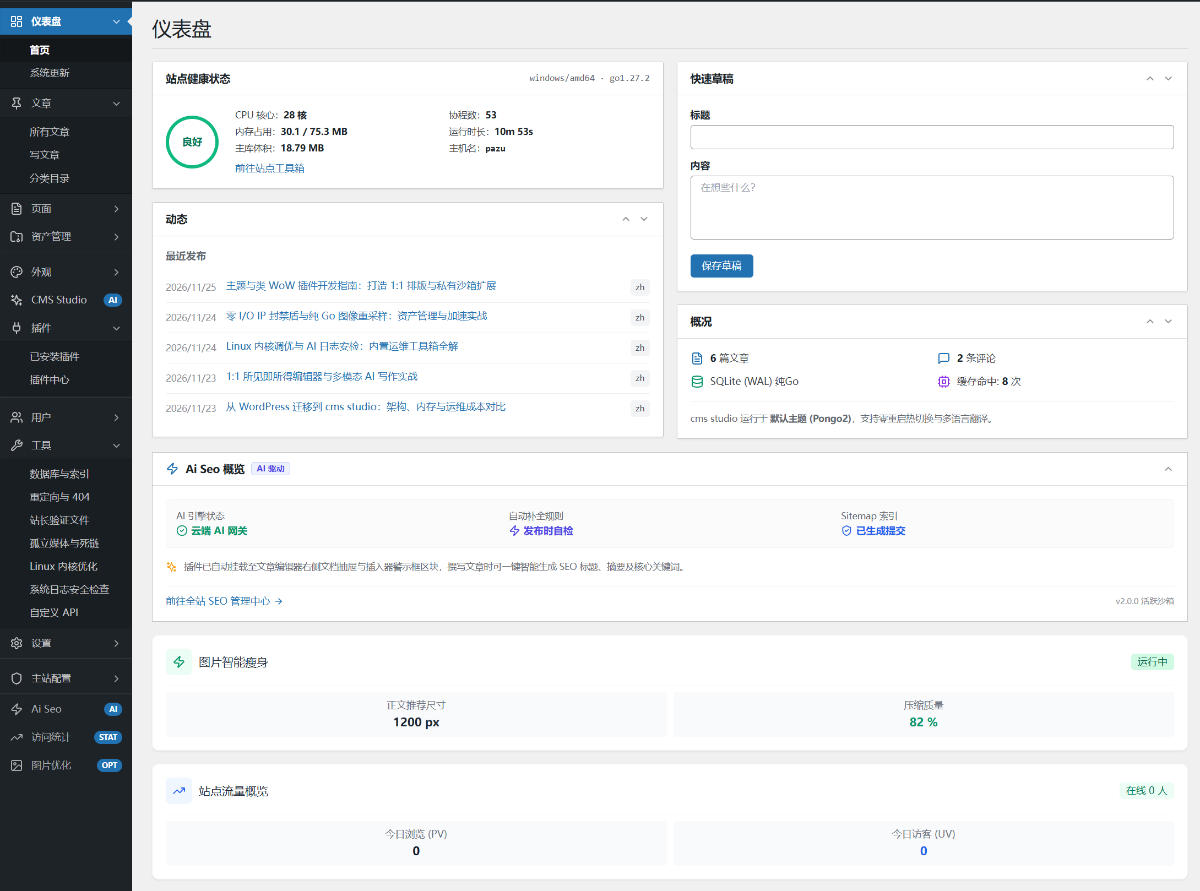
Inspired by World of Warcraft's addon sandbox, cms studio runs third-party logic inside a Pure Go Goja ES6 sandbox with no host shell or OS file access, and gives each plugin its own isolated private SQLite database (e.g., plugins/aioseo/aioseo.db), keeping the core business database completely clean.
3. Practical Migration Tips
If you plan to migrate from WordPress to cms studio, you can import historical posts, categories, and media paths directly and configure 301 redirect rules in the admin toolbox to preserve legacy link equity without loss.